*HACHOOS POCHOOS*
Hello dear viewers and readers! Wishing you'll a good day ahead. Thank you for all the love and support on my previous post. So glad and grateful to have you'll as a part of this MAGIC fam bam! 💓🔥👪 As a reward, I'm going to share the *HACHOOS POCHOOS* of the blood today. So what does HACHOOS POCHOOS stands for today? Well if you have watched Disney fairy tales or have been keeping up yourself addicted to any witchcraft stories, you would realize a magic never works without any tool that has the ability to distort your perceptions or to get you to perceive things that never happened, just like a visual illusion. HACHOOS POCHOOS stands for the tools that makes up the magic liquid ; the BLOOD! 🎉
The blood is made up of four main HACHOOS POCHOOS. First, the erythrocytes which are also known as the red blood cells, second the leukocytes which are the white blood cells, the platelet known as the thrombocytes and finally the plasma which makes the liquid component of the blood.
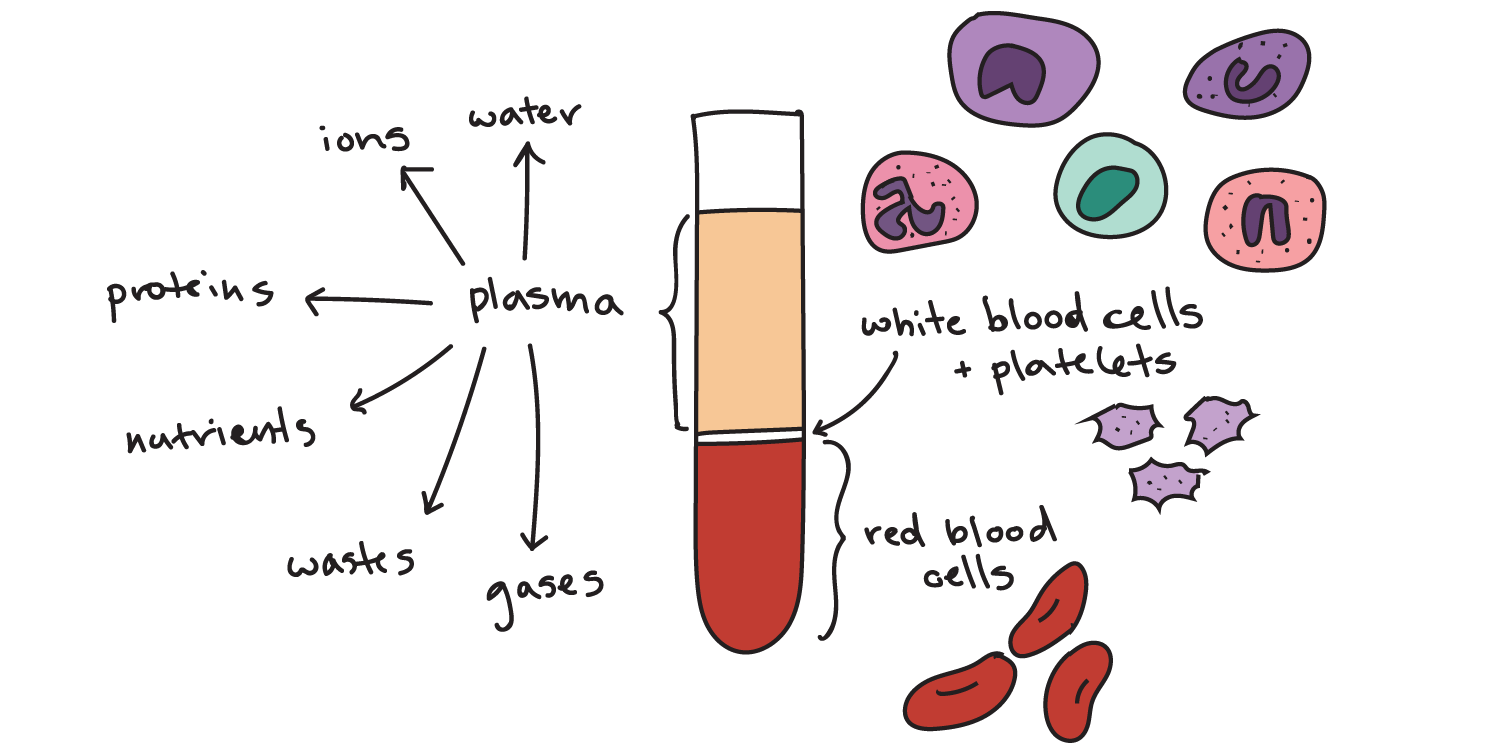
The first tool we will discuss today is the plasma .Plasma is the liquid component of blood, in which the red blood cells, white blood cells, and platelets are suspended. It constitutes more than half of the blood's volume and consists mostly of water that contains dissolved salts (electrolytes) and proteins. The major protein in plasma is albumin. Albumin helps keep fluid from leaking out of blood vessels and into tissues, and albumin binds to and carries substances such as hormones and certain drugs. Other proteins in plasma include antibodies, which actively defend the body against viruses, bacteria, fungi, and cancer cells, and clotting factors, which control bleeding. Plasma has other functions as well. It acts as a reservoir that can either replenish insufficient water or absorb excess water from tissues. When body tissues need additional liquid, water from plasma is the first resource to meet that need. Plasma also prevents blood vessels from collapsing and clogging and helps maintain blood pressure and circulation throughout the body simply by filling blood vessels and flowing through them continuously. Plasma circulation also plays a role in regulating body temperature by carrying heat generated in core body tissues through areas that lose heat more readily, such as the arms, legs, and head. Here is an image of the plasma for a better understanding.

The next tool we're going to look into are the red blood cells. Red blood cells (also called erythrocytes) make up about 40% of the blood's volume. Red blood cells contain hemoglobin, a protein that gives blood its red color and enables it to carry oxygen from the lungs and deliver it to all body tissues. Oxygen is used by cells to produce energy that the body needs, leaving carbon dioxide as a waste product. Red blood cells carry carbon dioxide away from the tissues and back to the lungs. When the number of red blood cells is too low (anemia), blood carries less oxygen, and fatigue and weakness develop. When the number of red blood cells is too high (polycythemia), blood can become too thick, which may cause the blood to clot more easily and increase the risk of heart attacks and strokes. Red blood cells are produced in the bone marrow and are destroyed in the spleen within a life span 0f 120 days. Do you'll know the red blood cells are in biconcave disc shape and they have no nucleus? Red blood cells has this special structure to accommodate more hemoglobin. Here is a picture of the red blood cell for a better view.

A quick review on the shape, size and function of erythrocyte.
Next, we're going to learn about the white blood cells which are also known as the leukocytes. White blood cells are fewer in number than red blood cells, with a ratio of about 1 white blood cell to every 600 to 700 red blood cells. White blood cells are responsible primarily for defending the body against infection. white blood cells are classified into 2 groups which are known as the granulocytes and agranulocytes. There are five main types of white blood cells. The cells which has name ending with prefixes of "cytes" are granulocytes as they have granules in their cytoplasm of cell while the cells with the prefixes of "phils" are agranulocytes because they have no granules in their cytoplasm of cell. The types of white blood cell we could find in our body are as below :
Neutrophils, the most numerous type, help protect the body against infections by killing and ingesting bacteria and fungi and by ingesting foreign debris.
Lymphocytes consist of three main types: T cells (T lymphocytes) and natural killer cells, which both help protect against viral infections and can detect and destroy some cancer cells, and B cells (B lymphocytes), which develop into cells that produce antibodies.
Monocytes ingest dead or damaged cells and help defend against many infectious organisms.
Eosinophils kill parasites, destroy cancer cells, and are involved in allergic responses.
Basophils also participate in allergic responses.
Some white blood cells flow smoothly through the bloodstream, but many adhere to blood vessel walls or even penetrate the vessel walls to enter other tissues. When white blood cells reach the site of an infection or other problem, they release substances that attract more white blood cells. The white blood cells function like an army, dispersed throughout the body but ready at a moment's notice to gather and fight off an invading organism. White blood cells accomplish this by engulfing and digesting organisms and by producing antibodies that attach to organisms so that they can be more easily destroyed. When the number of white blood cells is too low (leukopenia), infections are more likely to occur. A higher than normal number of white blood cells (leukocytosis) may not directly cause symptoms, but the high number of cells can be an indication of a disease such as an infection or leukemia. For more information regarding white blood cells, turn on to the next post by my friend, Fred!

A glimpse on the structures of the different type of white blood cells.
The final tool we are looking into are the platelets (also called thrombocytes) are cell-like particles that are smaller than red or white blood cells. Platelets are fewer in number than red blood cells, with a ratio of about 1 platelet to every 20 red blood cells. Platelets help in the clotting process by gathering at a bleeding site and clumping together to form a plug that helps seal the blood vessel. At the same time, they release substances that help promote further clotting. When the number of platelets is too low (thrombocytopenia), bruising and abnormal bleeding become more likely. When the number of platelets is too high (thrombocythemia), blood may clot excessively, causing a stroke or heart attack.

The final tool we are looking into are the platelets (also called thrombocytes) are cell-like particles that are smaller than red or white blood cells. Platelets are fewer in number than red blood cells, with a ratio of about 1 platelet to every 20 red blood cells. Platelets help in the clotting process by gathering at a bleeding site and clumping together to form a plug that helps seal the blood vessel. At the same time, they release substances that help promote further clotting. When the number of platelets is too low (thrombocytopenia), bruising and abnormal bleeding become more likely. When the number of platelets is too high (thrombocythemia), blood may clot excessively, causing a stroke or heart attack.
A picture of the platelets surrounding the red blood cells.
Dear readers, I hope I have given some brief explanation regarding the HACHOOS POCHOOS of our magical liquid. I promise to upload more details regarding red blood cells and platelets on my next blog. Thank you so much for reading and also for your support. Wishing you'll a good day and sayonara!


Comments
Post a Comment